Most people open a guest-post catalog and sort by the biggest number they recognise. That is how you end up with expensive links that do almost nothing for the site you actually care about.
This guide is the slower, better habit: use Domain Rating (DR), Domain Authority (DA), and traffic as filters — then decide with niche fit, sample content, and the listing terms. If you are new to the product path itself, read the advertiser how-to first, then come back here before you fill the cart.
Start with the job, not the metric
Write one sentence before you filter anything: “I need placements that support this topic for this country/language.” That sentence kills half the bad options early.
Examples that work:
- German home-finance blog posts with dofollow links to a comparison page
- English SaaS tutorials aimed at US readers
- French local business sites for a regional landing page
If you cannot write that sentence, you are shopping — not buying.
What DR and DA are good for (and what they are not)
DR (Ahrefs) and DA (Moz) are comparative scores. They help you sort a long list. They do not prove a site will move your rankings tomorrow.
Use them like this:
- Floor, not trophy. Set a minimum that matches your budget tier, then stop staring at the ceiling.
- Compare within a niche. A DR 40 travel blog and a DR 40 casino PBNs are not the same purchase.
- Watch for mismatch. Very high DR with near-zero traffic (or the reverse) deserves a second look at the sample article and outbound links.
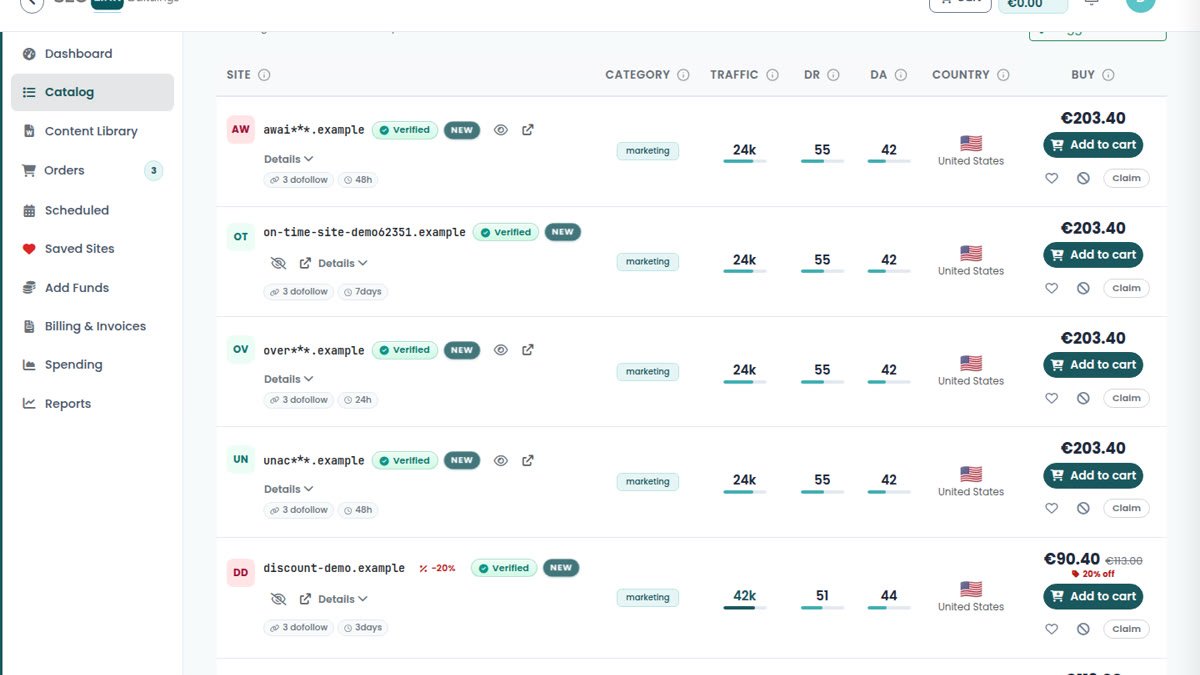
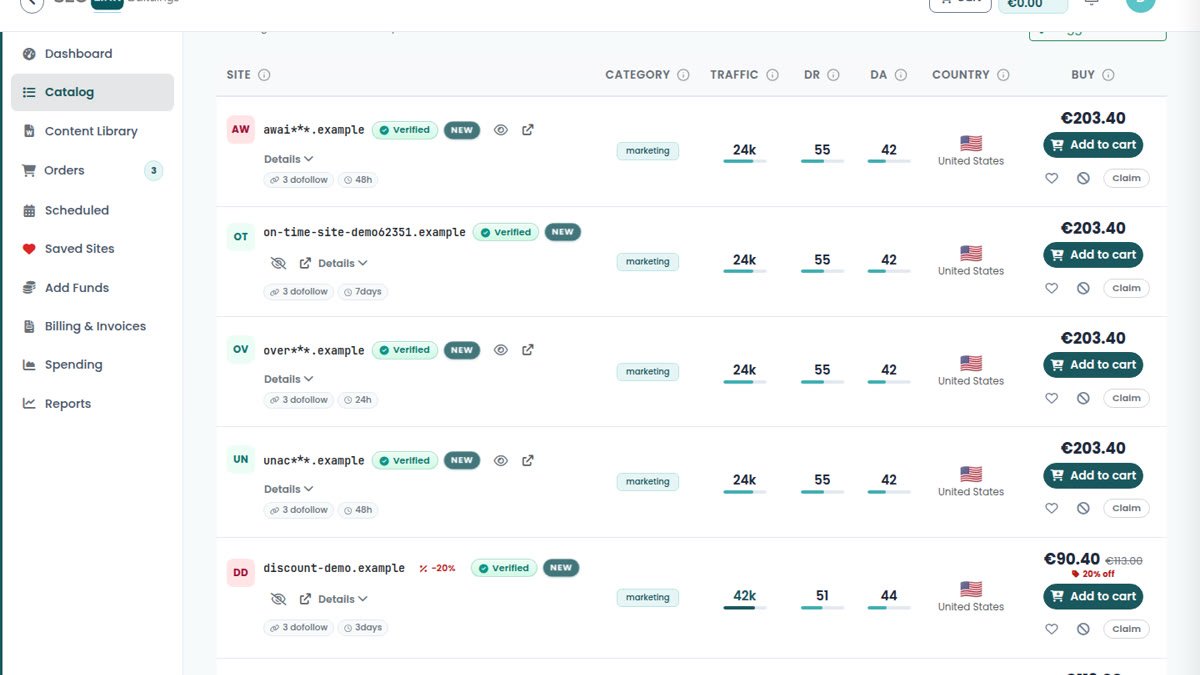
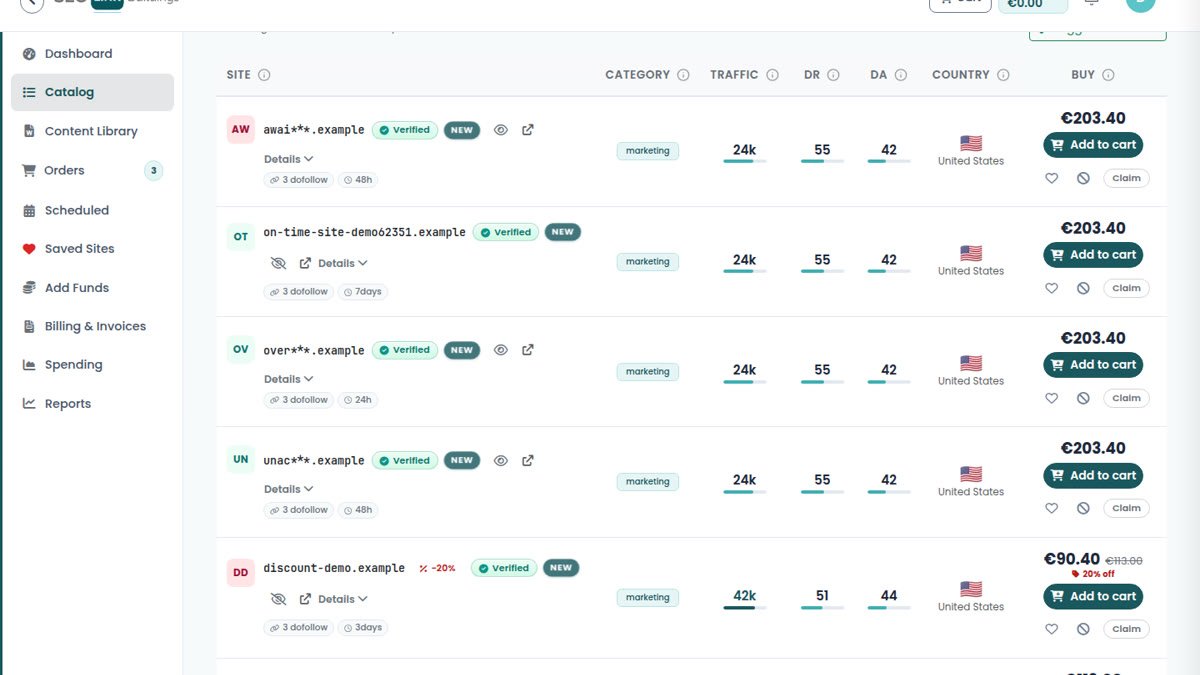
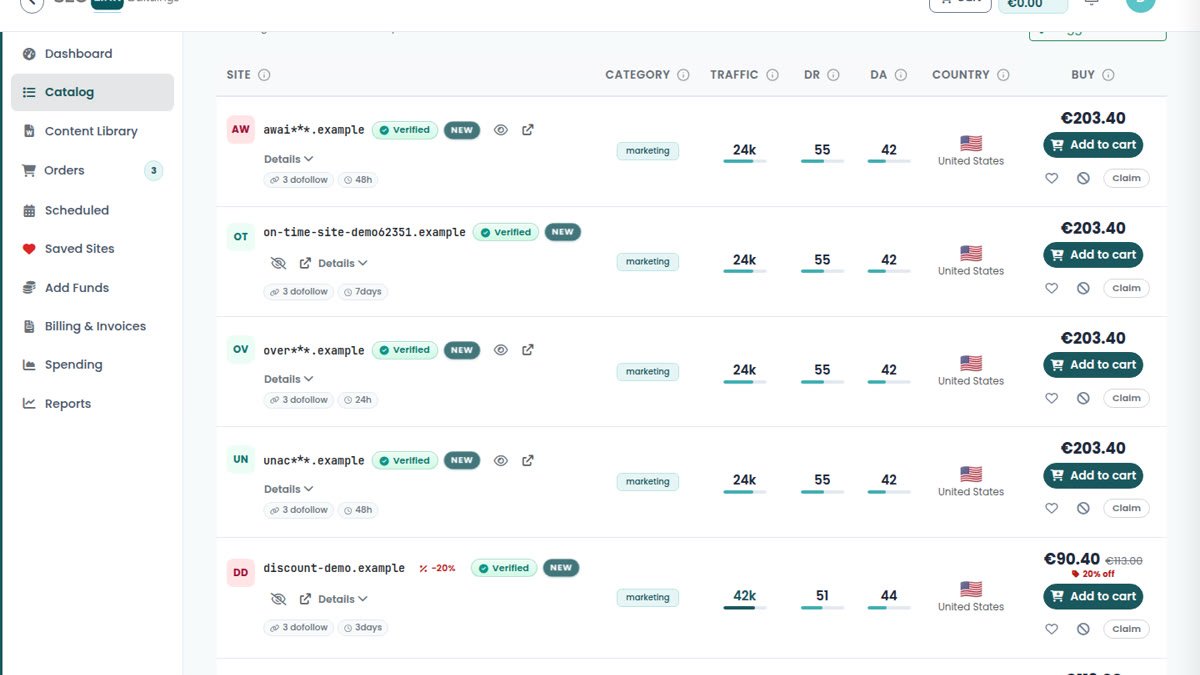
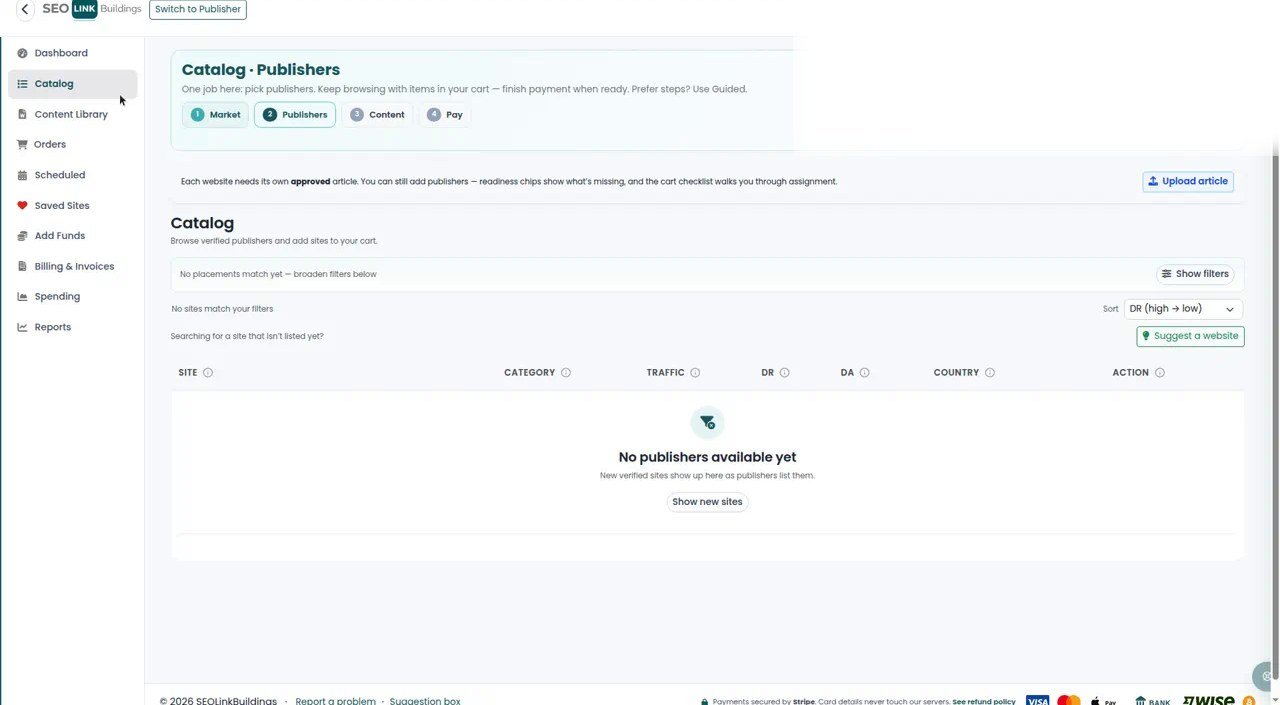
On SEOLinkBuildings you will see bars under the numbers so a “55” has a scale. That helps you scan a page of results without treating every digit as gospel.
Traffic: prefer signal over vanity
Monthly traffic estimates are still estimates. They are useful when you ask: “Does anyone actually read this site?”
Practical rules we use with advertisers:
- Prefer sites with steady, believable traffic for the niche — not a spike that looks borrowed.
- Match traffic geography to your target market when the listing shows a primary country.
- If traffic is low but the site is tightly topical and indexed, it can still be worth a trial order. One relevant referring domain often beats three random “authority” links.
Niche fit beats almost everything else
Open the sample article. Read the categories. Ask whether your anchor and URL would look natural on that page.
Skip a listing when:
- the sample is spun or stuffed with outbound links
- the niche tag says “marketing” but every post is about gambling offers
- the publisher’s turnaround or link type does not match what you need
Sensitive topics (crypto, CBD, forex, and similar) often carry add-on prices. That is normal. What is not normal is hiding the topic until after checkout — pick the add-on on purpose.
A short shortlist process that works
- Filter country, language, and category.
- Set rough floors for DR/DA and traffic that fit the campaign budget.
- Open five to ten listings. Check sample, link type, turnaround, and price.
- Add only the ones you would still want next month.
- Upload content before you check out — see the buy guide — then pay from the wallet.
After the live URL lands, run the live-link checklist. Buying well means nothing if you never verify the placement.
Common mistakes
- Sorting only by highest DR and buying the first three rows
- Ignoring language and country because the price looked good
- Filling a 20-site cart with no approved articles ready
- Treating “verified” as a substitute for reading the sample
Browse the public marketplace overview if you want the model in plain language, or jump into how it works. When you are ready to shortlist for real, create an advertiser account and open the catalog with a written brief in hand.
Frequently asked questions
Is a high DR site always better than a mid-DR niche blog?
No. A DR 70 site in the wrong niche can underperform a DR 28 site that already ranks for your topic. Relevance and real traffic usually beat a vanity score.
What if traffic looks fine but the sample article is thin?
Treat that as a red flag. Open the sample, skim recent posts, and skip listings that feel like pure link farms — even when the metrics look tidy.
Should I filter verified sites only?
Verified helps, but it is not the whole story. Combine verification with niche match, turnaround, link type, and a quick look at the sample article.
How many sites should I shortlist before buying?
For a first campaign, five to ten solid options is enough. Fill a huge cart before you have content ready and you will pay for delay later.