“English guest posts” is not a strategy. UK readers and US readers share a language and still live in different search markets. Buy as if that mattered — because it does.
This guide is about what to buy and what to skip when you shortlist publishers for Britain and the United States on SEOLinkBuildings. For the general metric playbook, use how to choose a publisher site. For continental Europe as a whole, see the Europe buying guide.
UK English vs US English audiences
Spelling is the obvious bit (colour / color, organise / organize). The deeper cut is audience and intent.
- UK: local services, regulated verticals, and publishers that talk in pounds, postcodes, and British brands feel natural.
- US: national blogs and niche .com sites often assume dollars, state-level examples, and US product names.
Drop a US-flavoured article on a UK trade site and it reads wrong even when the grammar is fine. Publishers notice. Readers notice. Search engines notice the mismatch between query geography and page context more than people admit.
Write the brief for one market. If you need both, plan two placements — or one carefully international piece on a genuinely international site, not a “close enough” local blog.
.co.uk vs .com (and when the TLD is not enough)
A .co.uk domain with UK content and UK traffic is a clean fit for many Britain-focused pages. A .com can still work for the UK if the audience and topics are clearly British. The reverse is also true for US targets: a strong .com with US traffic usually beats a random .co.uk that happens to speak English.
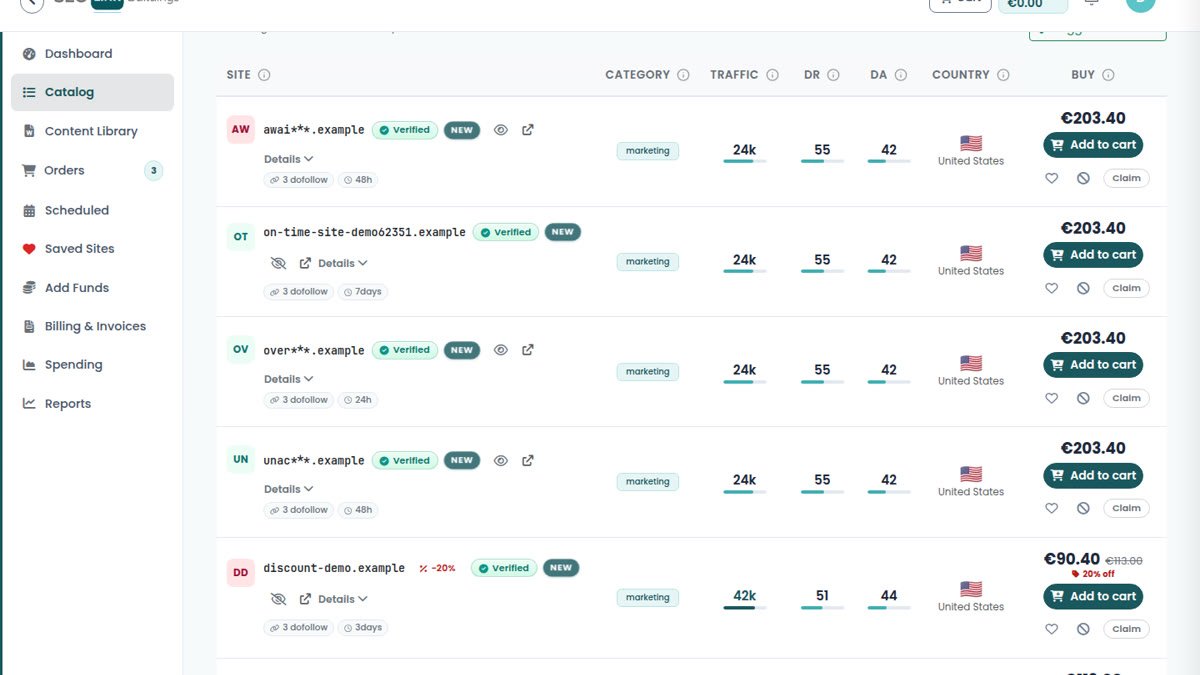
Do not buy on TLD alone. Open the sample. Check primary country in the listing. Skim recent posts for who the writer is talking to. TLD is a hint, not a purchase order.
Topical relevance still beats vanity metrics
DR and DA help you sort. They do not forgive a casino link on a parenting blog — or a thin “resources” page stuffed with outbound URLs.
For UK/US campaigns we still use the same shortlist habit:
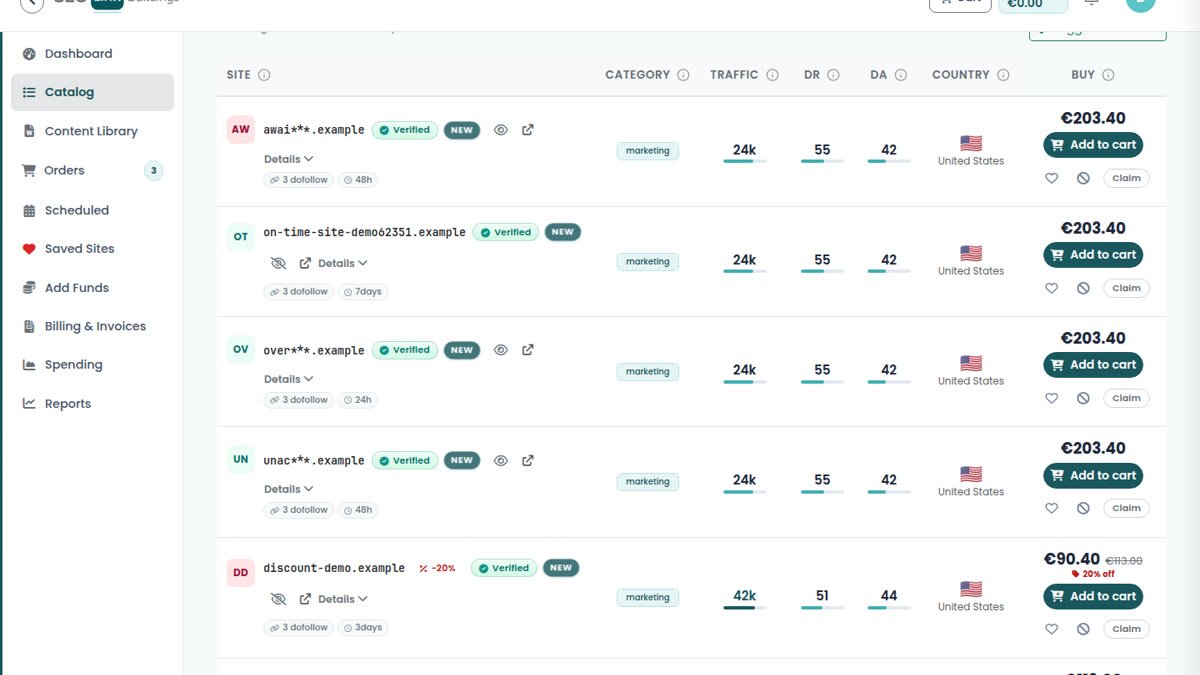
- Filter country, English language, and category.
- Set floors for DR/DA and traffic that match budget — then stop chasing the ceiling.
- Open five to ten listings. Read the sample. Check link type, turnaround, sponsored flags, price.
- Keep only sites you would still want next month.
Full detail lives in the publisher selection guide. The UK/US twist is simple: match the market before you fall in love with the score.
Pricing expectations with a EUR wallet
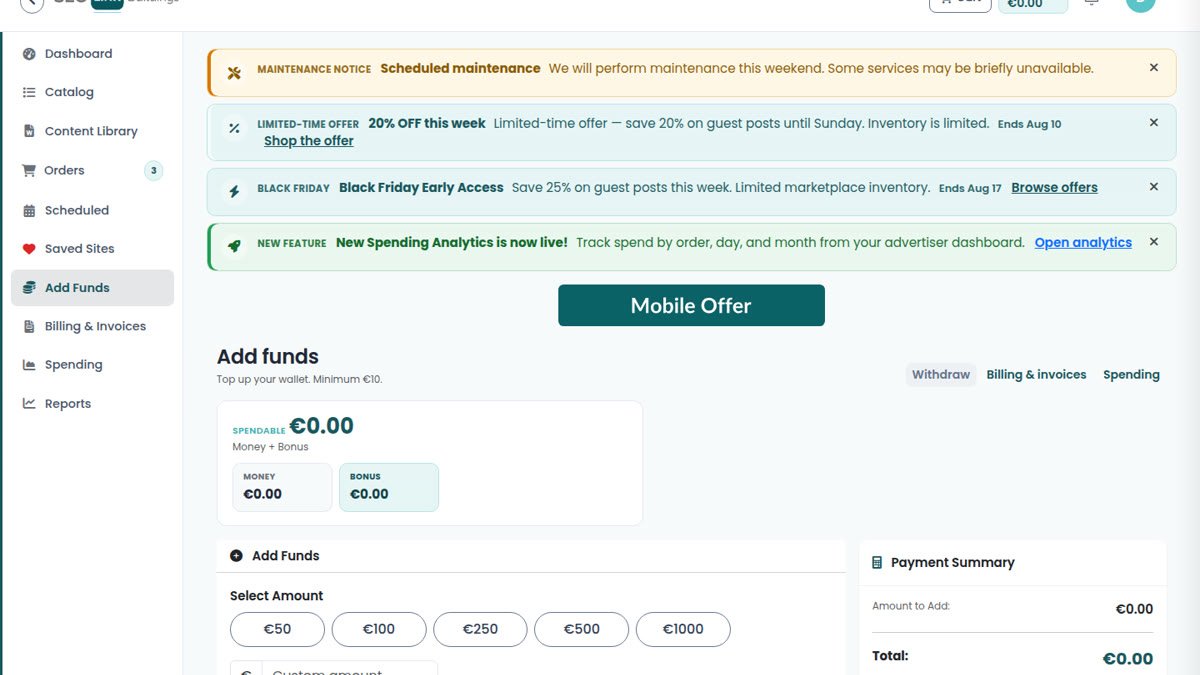
SEOLinkBuildings runs the advertiser wallet in euros. You top up spendable balance, then pay placements from that balance at checkout. Listing prices are therefore easiest to budget in EUR even when your own finance team thinks in GBP or USD.
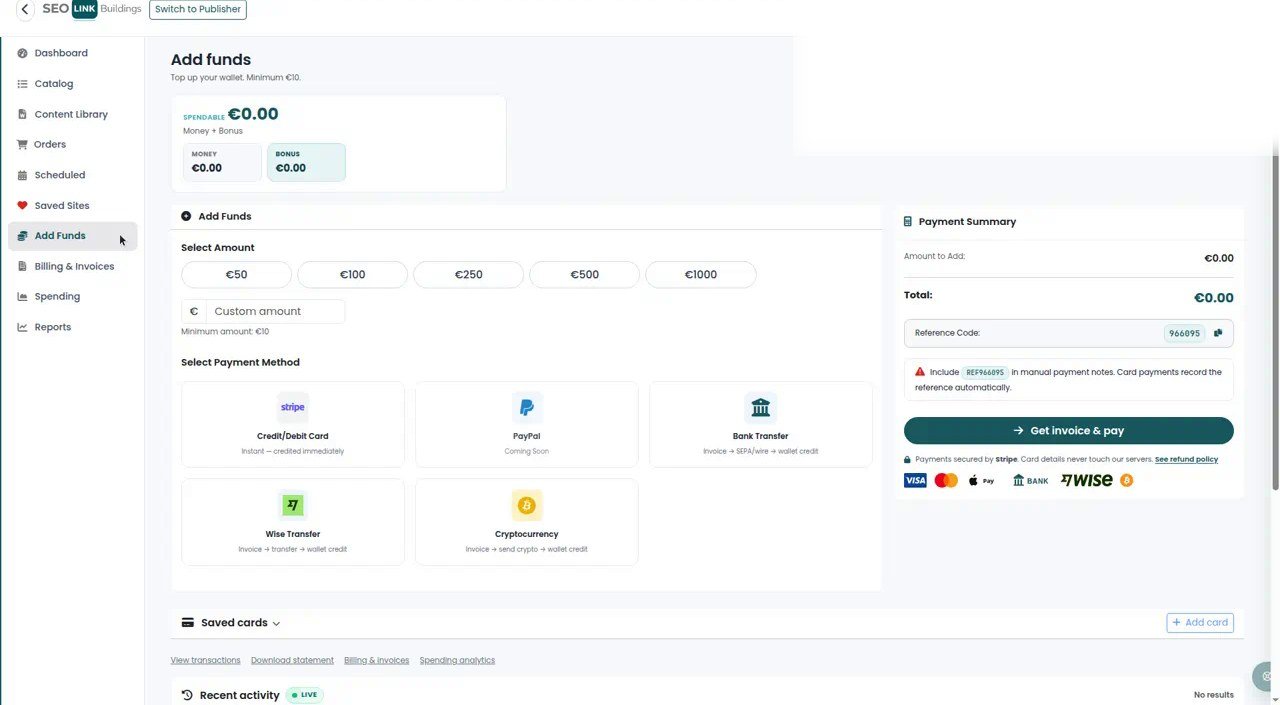
Practical habit: convert your campaign budget to EUR once, set a per-placement band, and shop inside that band. Mid-tier niche blogs often beat “premium” generic sites that sell English as a blanket label. Extremely cheap “high DR” offers are usually cheap for a reason.
Disclosure and sponsored norms
UK and US publishers vary in how they label paid placements. Some expect a sponsored note. Some sell dofollow editorial-style guest posts with clear listing terms. Some are nofollow or sponsored by default.
Buy what the listing says. Do not assume “guest post” always means a quiet dofollow link with no disclosure. If your brand needs a specific attribute mix, filter for it and confirm in the order thread before the article goes live.
That clarity also matters internally. Finance and legal teams sleep better when sponsored status matches the invoice story.
What to skip
- PBNs and link farms — mixed topics, hollow design, outbound spam, metrics that look painted on
- Thin or fake-looking traffic — high DR, empty audience, or spikes that do not match the niche
- Wrong-market English — US-only audience for a UK landing page (and the reverse)
- Hidden terms — nofollow/sponsored sprung after payment, or sensitive niches without the listed add-on
- Cart stuffing — twenty sites, zero approved articles, hope as a plan
If a site does not feel like a real publication for real readers in the country you care about, skip it. There will be another listing tomorrow.
Marketplace vs outreach for UK and US
Cold outreach still works in English-speaking markets. It also eats calendar weeks. A marketplace shortens the ops loop: filter, price, order, chat, live URL. It does not replace strategy — it replaces chasing unanswered emails.
When you want the trade-offs spelled out, read marketplace vs cold outreach vs digital PR. Then decide which jobs belong on SEOLinkBuildings and which still need a journalist pitch.
A clean first campaign shape
- Pick one primary market (UK or US) and one target URL.
- Write the audience sentence. Filter the marketplace / catalog to match.
- Shortlist five to ten publishers. Fund the EUR wallet with a buffer.
- Upload content before checkout. Pay. Track orders. Verify live URLs the day they arrive.
Ready to buy with that discipline? Create an advertiser account, verify your email, and open the catalog with the market already decided.
Frequently asked questions
Can one English guest post cover both the UK and the US?
Sometimes for global product pages. Often not for local intent. Spelling, examples, currency, and publisher audience still differ. Prefer market-matched sites when rankings are country-specific.
Is a .co.uk domain always better for UK rankings than a .com?
Not always — but .co.uk plus UK traffic and UK-facing content is a strong signal. A .com with a clear UK audience can work. A .com with mostly US readers rarely helps a UK-only landing page.
Why are prices shown in euros on SEOLinkBuildings?
The platform wallet runs in EUR. You fund spendable balance in euros and pay placements from that balance. Compare listing prices in EUR against your campaign budget the same way you would any other currency once, then stick to it.
What should I skip even if DR looks high?
Skip PBNs, sites with thin or fake-looking traffic, link-farm samples, and listings that hide sponsored or nofollow terms until after payment. High DR without readers or topical fit is a vanity buy.